 Simply BP
What goes in each column
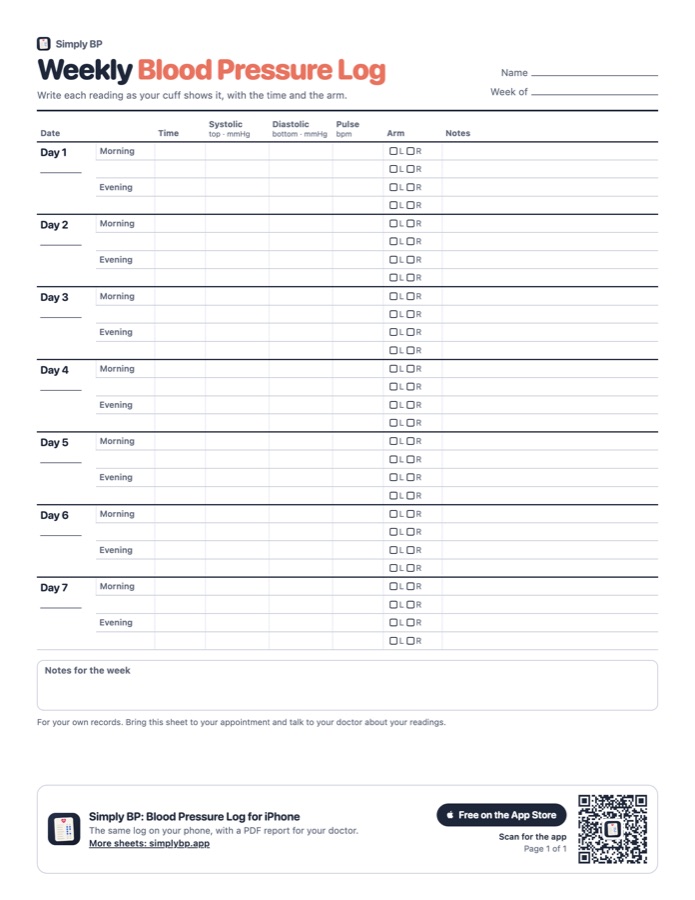
Date
Write the date once per day. If you skip a day, cross the row out instead of leaving it empty, so nobody wonders later whether a reading went missing.
Time
The time of each reading, not just "morning". Readings taken an hour apart can differ, and the exact time helps your doctor read the pattern.
Systolic and diastolic
The top and the bottom number from your cuff's screen, in mmHg. Copy them exactly as shown; don't round them to the nearest five.
Pulse
Most cuffs show it next to the other two numbers, in beats per minute. Writing it down takes a second and saves guessing later.
Arm
Tick L or R. If you ever switch arms, the sheet still shows which reading came from which side.
Notes
A few words when something was out of the ordinary: a late dose, coffee, a poor night, pain, a rushed reading. Leave it empty on normal days.
Weekly or monthly?
Take the weekly sheet when your doctor asks for a week of home readings before a visit: morning and evening, every day. It holds exactly that, with room for two readings per sitting.
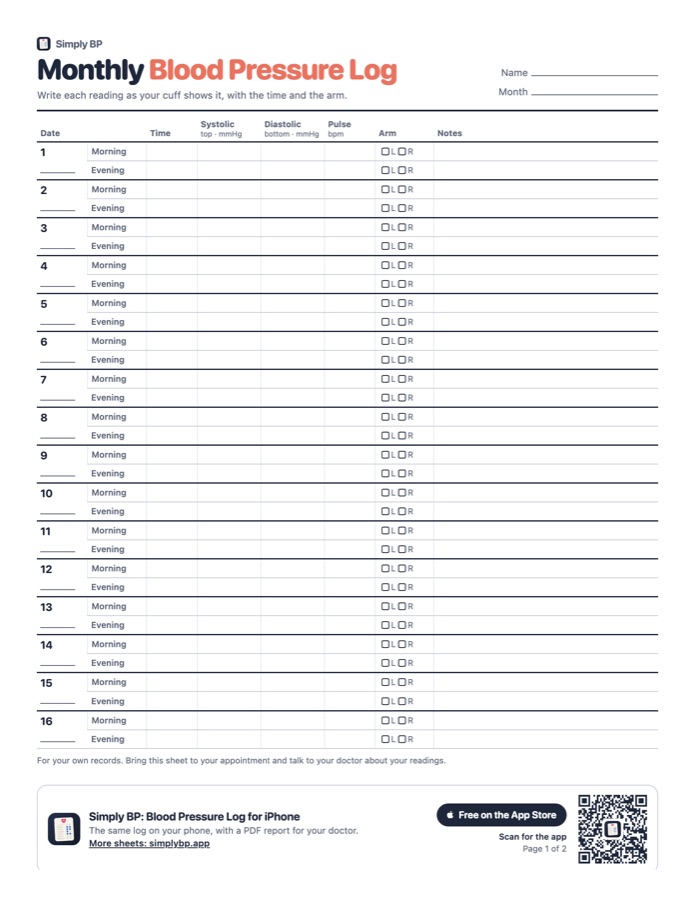
Take the monthly sheet if you write down a morning and an evening reading over a longer stretch, for example while a new daily routine settles in. Every date of the month gets its own two rows, so a glance shows which days are missing.
The 7-day home routine
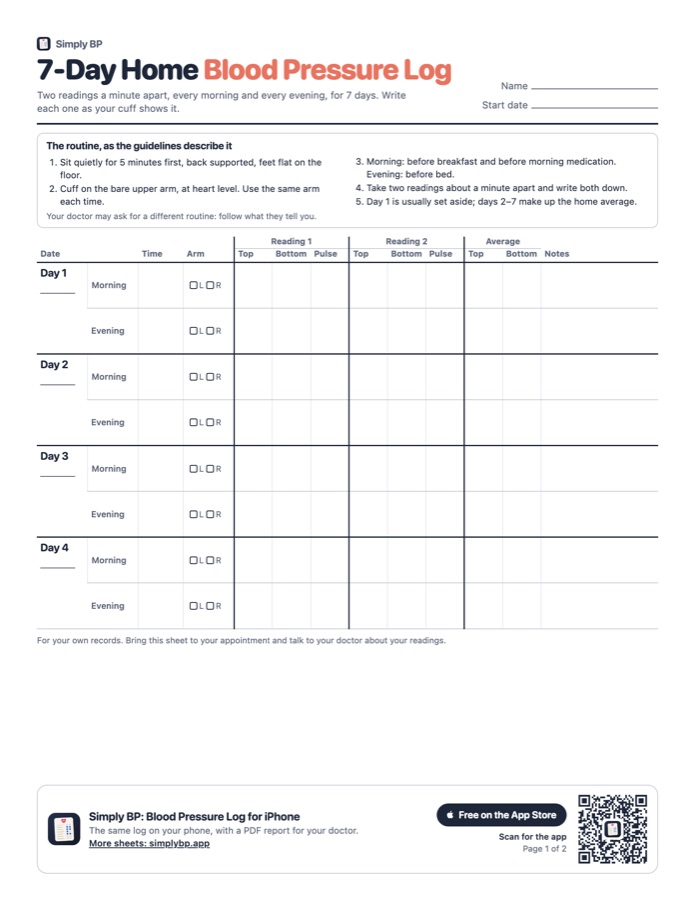
Before a visit, doctors often ask for a week of home readings taken in a set routine. Published guidance from the AHA/AMA (2020) and the ESH (2023) describes it: two readings about a minute apart, every morning and every evening, for seven days. The 7-day sheet is laid out exactly that way, with the steps printed in a short box at the top.
Each sitting has one row: the time, the arm, the top number, bottom number and pulse for both readings, and a note if something was unusual. There's an optional column for the average of the two readings. Day 1 is usually set aside, and the boxes at the end take the averages of days 2–7 if you want to work them out. The guidelines are listed on the Sources page; your doctor may ask for a different routine, and theirs comes first.
A one-page summary for the appointment
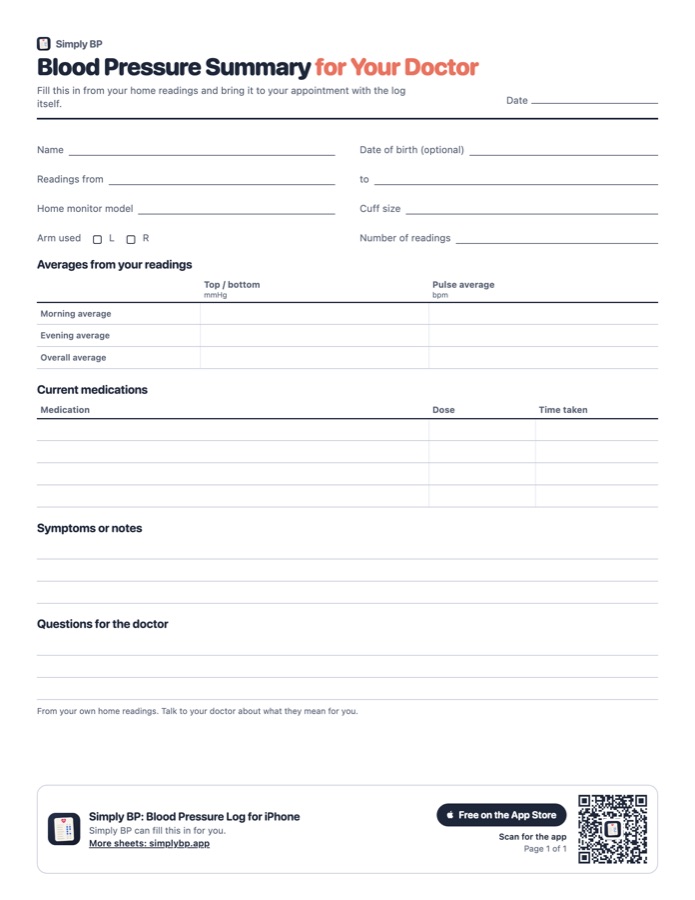
Appointments are short. The summary sheet puts what your doctor is likely to ask about on one page: the period your readings cover, how many there are, your cuff model and size, which arm you use, the morning, evening and overall averages, and your average pulse.
Below that are blank lines for your current medications with the dose and the time you take them, for symptoms or notes, and for the questions you want to ask, so they don't get forgotten in the room. Bring it together with the log itself: the summary is a starting point, and the readings are the detail behind it.
Printing tips
- The English sheets are US Letter; the other languages are A4. Either prints fine on the other paper size with "Fit to page".
- They're black and white, so any home or office printer will do.
- Print the monthly sheet double-sided to keep the whole month on one piece of paper.
- Fill it in with a pen: pencil fades and smudges in a bag.
A one-page summary for the appointment
Bring the original sheet, not a photo or a summary. Your doctor sees every reading with its time and arm and decides what the numbers mean for you. Talk to your doctor about your readings instead of drawing conclusions from the sheet yourself.
Why there are no ranges on the sheet
There are no colored zones, target lines or categories. Guidelines in different countries draw those lines at different numbers, and what counts for you is your doctor's call, so the sheet only gives you a clean place to write.
More on keeping a log: what to write in a blood pressure log